Introduction
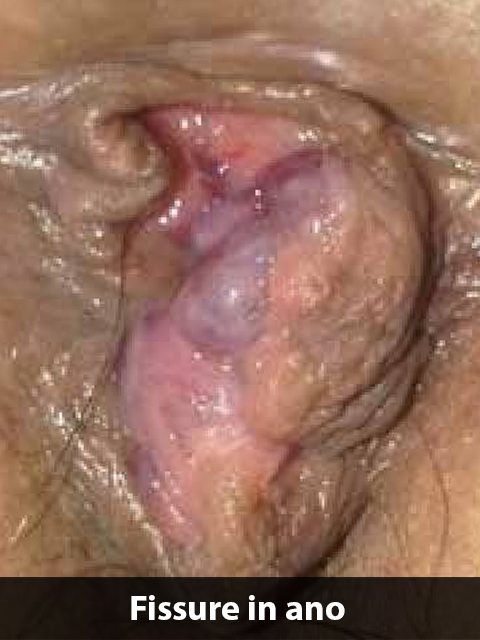
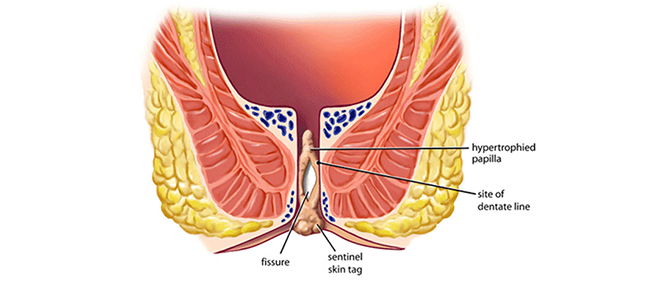
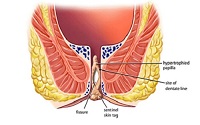
A fissure is a tear of the skin at the edge of the anus. It can cause pain, bleeding and/or itching.
Causes
- An anal fissure is usually caused by a hard and dry bowel movement, alongwith a tight anal musculature, which tears the anal lining.
- Other causes include diarrhoea and inflammation of the anorectal area.
- Trauma also can cause Fissure. During childbirth, 11% of women develop anal Fissure. Fissure can also be caused by digital insertion, foreign body insertion, or anal intercourse.
- A low-fibre diet may play a role in the development of Fissure.
Anal Fissure affect people of all ages, particularly young and otherwise healthy people. They are equally common in men and women.
Types
Fissure can be acute (new) or chronic (persistent).
- An acute fissure has an 80% chances of healing.
- When a fissure lasts over 6 weeks or is repetitive in nature, it is considered Chronic and has less than 50% chances of healing.
Sometimes an anal Fissure and a hemorrhoid develop at the same time.
Symptoms
- An anal fissure causes a sharp, stinging, or burning pain during a bowel movement. The pain, which can be severe, may last for a few hours.
- Fissure may itch.
- They often bleed lightly or occasionally cause a yellowish discharge.
Gallery
Diagnosis
Most health professionals can diagnose an anal Fissure by listening to the symptoms and by looking at the anus. Usually, the health professional can see the Fissure by gently separating the buttocks.
A health professional may use a gloved finger (digital rectal examination) or a lighted instrument (anoscope) to examine the Fissure. However, if the Fissure is extremely painful, the health professional will usually wait until it has begun to heal before performing a rectal exam or using an anoscope (anoscopy) to rule out other problems. A topical anaesthetic may be used if an immediate examination is necessary.
Treatment
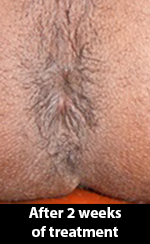
If it's a first or second episode of Fissure, at least 90 % of Fissure heal by special Ayurvedic
formulation of Dr. Arvind Tiwari.These drugs are highly effective ,result oriented which completely
heal fissure within 4 to 6 weeks.
For those Fissure that are appearing again and again , Kshar Sutra Therapy is recommended.
Introduction
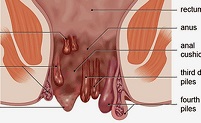
Haemorrhoides - commonly known as Piles - are swollen blood vessels (veins) which develop inside and/or outside the anus. They are felt as lumps around and inside the anus . The lumps are formed by increased pressure on blood vessels in the area, causing them to enlarge and swell. If they become infected, they can cause bleeding, pain and discomfort and require medical attention.
Frequently asked questions about Fissure in ano
- What if a fissure does not heal by medicines..?
A fissure that does not heal should be re-examined to determine if an underlying problem that prevents healing exists. This could be due to scarring or muscle spasm of the internal anal sphincter muscle. Those which continue to cause pain and/or bleeding can be corrected by Kshar Sutra Therapy.
.
- What happens during the Major Surgery ?
Surgery is done under general anaesthesia and consists of cutting a portion of the anal muscle and leaves the wound to heal by the time. This helps the fissure to heal by preventing spasm, which interferes with healing. At times, cutting this muscle may interferes with the ability to control bowel movements. Some surgeons may also remove the fissure and the underlying scar tissue, but it will result in a very big wound that may take 3-4 weeks to heal.
- How much time is required for complete recovery after surgery ?
patients have to stay in the hospital for a day or two. Complete healing occurs in a few weeks, although pain often disappears after a 5-7days.
- What happens during Kshar Sutra Therapy ?
Kshar Sutra therapy is done under Local anaesthesia (i.e, only anus will be anaesthetised). It includes putting Kshar Sutra (Medicated Alkaline Thread) at a suitable place in the anus, so as the spasm of anal muscles are released. At times, Kshar Sutra is used to take out the whole Fissure , but not necessary in all patients because the actual cause is spasm of anal muscles.
- Can Fissure lead to colon cancer ?
Absolutely Not..! Persistent symptoms need careful evaluation, however, since conditions other than fissure can cause similar symptoms.

 +919827089853


Medicinal Treatment
Kshar Sutra Therapy Treatment